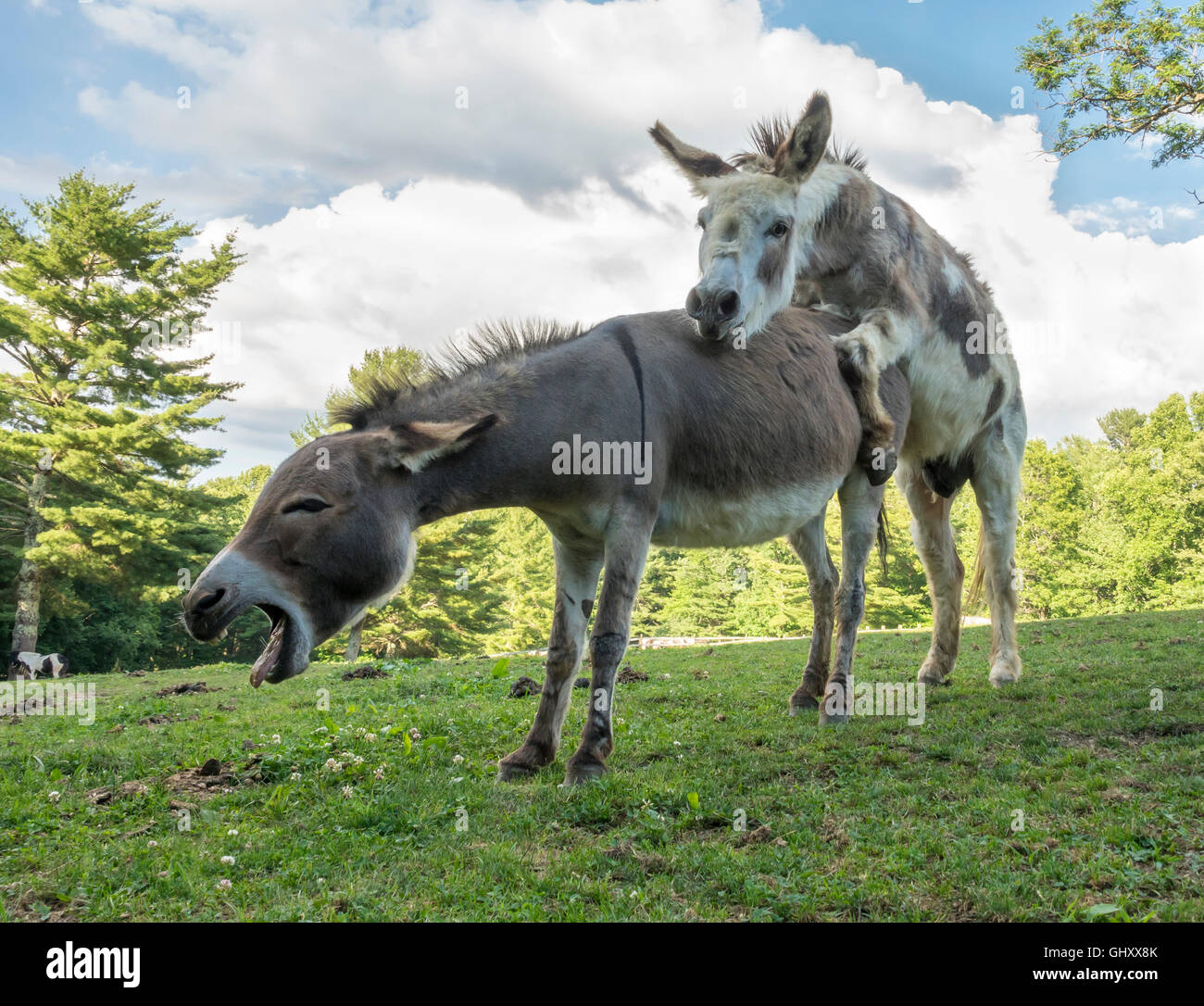

Donkeys have been domestic for thousands of years, portion various purposes from expatriation to society. One of the most challenging aspects of donkey reproduction is the process of donkey mating with donkey. Understanding this summons is essential for breeders aiming to produce healthy and rich offspring. This blog spot delves into the intricacies of donkey conjugation, the factors influencing successful breeding, and the care needed for both the jenny (distaff donkey) and the gob (manly donkey).
Understanding Donkey Mating
Donkey mating is a natural process that involves respective key stages. The foremost gradation is recognizing the signs of estrus in the jenny. Estrus, or rut, is the stop when the female donkey is open to conjugation. During this time, the jennet may exhibit behaviors such as frequent micturition, tail raising, and increased vocalization. The rut cycle in donkeys typically lasts about 21 days, with the factual rut menstruation permanent 5 7 days.
Preparing for Mating
Before introducing the gob to the jenny, it is indispensable to secure both animals are in well health. Regular veterinarian check ups, vaccinations, and deworming are crucial. Additionally, providing a balanced diet and adequate exercise can enhance the boilersuit health and fertility of both the jack and the jennet.
Creating a suited environment for conjugation is also important. The conjugation area should be quiet, loose from distractions, and boastfully plenty for the animals to move comfortably. A clean and dependable space will help thin stress and increase the chances of successful mating.
The Mating Process
The existent mating process involves respective stairs. The gob will typically near the jenny and sniff her to check if she is in estrus. If the jenny is receptive, she will stand however and allow the jack to backing her. The gob will then appreciation the jenny s flanks with his teeth and insert his phallus into her vagina. The mating process normally lasts a few proceedings, after which the gob will unhorse.
notably that donkeys can be quite vocal during conjugation, with the gob frequently braying loudly. This is a natural part of the outgrowth and should not be a cause for care.
Factors Influencing Successful Mating
Several factors can influence the success of donkey mating with donkey. These include:
- Age and Health: Both the jack and the jennet should be in thoroughly health and of allow age. Jennies typically reach intimate adulthood at round 2 3 years of age, while jackstones may take a bit yearner.
- Timing: Mating should pass during the jenny s rut period to maximize the chances of conception.
- Environment: A calm and focus loose environment can raise the likelihood of successful conjugation.
- Genetics: The genetic compatibility of the gob and jenny can also maneuver a role in the achiever of conjugation and the health of the offspring.
Post Mating Care
After conjugation, it is essential to admonisher both the jack and the jennet for any signs of discomfort or health issues. The jenny should be checked for signs of maternity, such as changes in behavior, appetite, and forcible appearing. Regular veterinary check ups can service ensure the jenny s health and the development of the foal.
Providing a balanced diet and adequate practice is crucial during the jenny's pregnancy. A pregnant jenny should be fed a dieting fertile in nutrients, including vitamins and minerals, to support the growth and development of the foal. Regular utilized can help conserve the jenny's boilersuit health and ready her for the birth appendage.
Common Challenges in Donkey Mating
While donkey mating with donkey is a natural process, it can sometimes nowadays challenges. Some common issues include:
- Infertility: Both jacks and jennies can experience sterility due to various factors, including health issues, age, and transmissible problems.
- Behavioral Issues: Some donkeys may showing aggressive or fearful behavior during conjugation, which can interfere with the process.
- Environmental Factors: Stress, disturbance, and other environmental factors can interrupt the conjugation operation and thin the chances of successful innovation.
Addressing these challenges much requires a compounding of veterinary care, behavioral training, and environmental adjustments. Working tight with a veterinary can assist name and resolve these issues, ensuring a successful conjugation process.
Note: If you meeting relentless issues with donkey mating, it may be beneficial to confab with a specialist in equid breeding.
Breeding Techniques
In some cases, traditional conjugation may not be successful, and alternative reproduction techniques may be necessary. These techniques include:
- Artificial Insemination: This involves collection ejaculate from the jack and artificially inseminating the jennet. This method can be useful when natural conjugation is not possible or when genetic diversity is desired.
- Embryo Transfer: This technique involves transferring an conceptus from a donor jenny to a recipient jennet. This can be utile for preserving valuable transmissible material or when the donor jenny has difficulty carrying a foal to term.
These techniques require specialized knowledge and equipment, so it is essential to employment with a veterinarian experienced in equid replication.
Note: Alternative education techniques can be more expensive and composite than traditional mating, but they pass valuable options for breeders facing particular challenges.
Caring for the Foal
Once the jennet gives birth, caring for the foal is crucial for its health and development. Newborn foals should be monitored tight for the first few days to ensure they are nursing decently and gaining weighting. Regular veterinarian bridle ups can assistant identify and address any health issues betimes on.
Providing a dependable and nurturing environs is indispensable for the foal's good being. This includes a houseclean and spacious extant expanse, approach to fresh water, and a balanced diet. Socialization with other donkeys and easy handling can assist the foal develop into a good familiarised and friendly pornographic.
Training and socialization should begin betimes to ensure the foal grows into a good behaved and adaptable donkey. Basic commands and positive support can service launch a solid bond between the foal and its coach.
As the foal grows, it is crucial to proctor its development and provide appropriate attention. Regular exercise, a balanced diet, and veterinary check ups can assistant ensure the foal's health and well being.
Donkeys are known for their seniority and resiliency, but they require right guardianship and attention to boom. By intellect the intricacies of donkey conjugation with donkey and providing the essential tending, breeders can produce goodly and robust offspring that will contribute to the continued success of donkey education programs.
Donkeys have been valued for their durability, endurance, and blue nature for centuries. By understanding the outgrowth of donkey conjugation with donkey and providing the essential care, breeders can secure the continued health and good being of these singular animals. From recognizing the signs of rut to providing post conjugation maintenance, each stride in the breeding process plays a crucial role in producing goodly and robust offspring. By addressing common challenges and utilizing alternative gentility techniques when essential, breeders can overcome obstacles and reach successful mating outcomes. Ultimately, the care and attending granted to both the jenny and the jack, as good as the foal, will determine the winner of the breeding program and the hereafter of donkey populations.