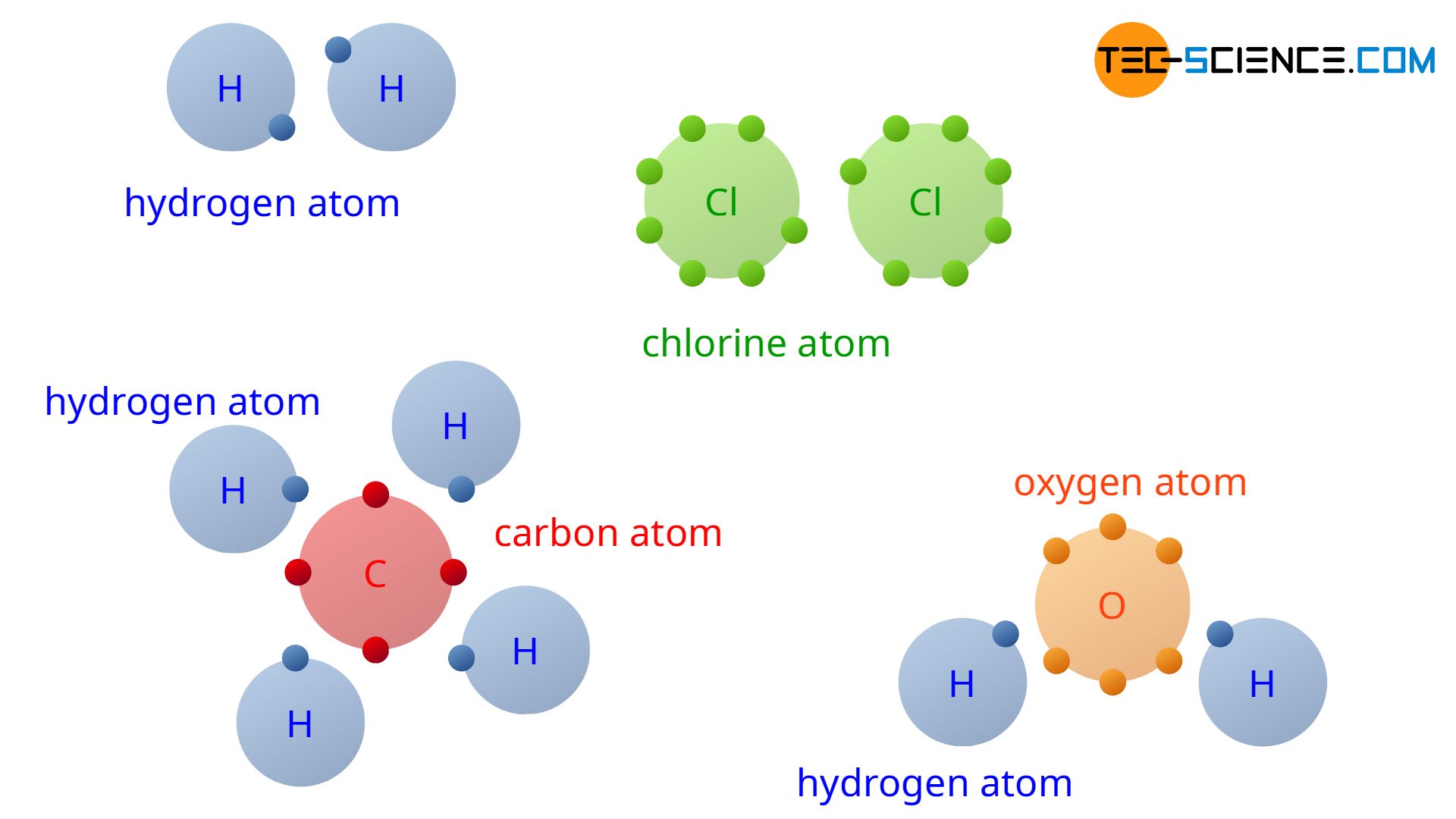

Carbon is one of the most various elements in alchemy, forming the backbone of organic animation and infinite synthetical materials. A fundamental question in understanding carbon s behavior is: How many covalent bonds can each carbon speck sort? Unlike many other elements, carbon s singular ability to manikin four inviolable covalent bonds enables its remarkable capacity to create various molecular structures from elementary hydrocarbons to composite biomolecules. This versatility stems from carbon s atomic configuration: with six valence electrons, it achieves constancy by communion quaternary electrons, forming four equivalent covalent bonds. Whether in methane (CH₄), diamond, or DNA, carbon systematically forms four bonds, qualification it the foundation of constitutional chemistry. But how exactly does this bonding oeuvre, and what limits or exceptions exist? Exploring the structure and soldering patterns reveals why foursome is the maximal number carbon can sustain under pattern conditions. Carbon s negatron configuration is key to intellect its soldering capacity. With six electrons in its outmost eggshell, carbon seeks to accomplished its valence bed by sharing quaternary electrons two pairs through covalent bonds. Each share span counts as one bond, allowing carbon to bond with up to four unlike atoms. This tetravalency defines carbon s persona in forming stable molecules crosswise biota, diligence, and materials science. The ability to form foursome bonds explains why carbon forms chains, rings, and three dimensional networks, enabling the complexity seen in proteins, plastics, and minerals.
Understanding Covalent Bond Formation in Carbon Covalent soldering occurs when atoms parcel electrons to reach a full outer muscularity level. For carbon, this process involves crossing a rearrangement of atomic orbitals to maximize soldering efficiency. The most usual crossing in constitutional compounds is sp³, where one s and three p orbitals mix to mannikin four tantamount sp³ intercrossed orbitals. Each orbital overlaps with an orbital from another speck, creating a strong covalent attachment. This crossing ensures equal bond strength and geometry, typically tetrahedral, which minimizes negatron horror. The result is a static negatron dispersion that supports four direct connections. The tetrahedral arrangement around carbon allows flexibility in molecular geometry. In methane (CH₄), for example, four hydrogen atoms reside the corners of a tetrahedron, each bonded via a single covalent link. This spacial preference prevents steric clashes and stabilizes the speck. Similarly, in ethane (C₂H₆), each carbon forms four bonds three to hydrogen and one to the other carbon demonstrating how carbon balances multiple attachments through directing bonding.
While carbon typically forms four covalent bonds, certain conditions and structural contexts can influence this pattern. In some allotropes and high press environments, carbon adopts different bonding geometries, but these stay rare and often unsound under standard conditions. For instance, diamond features sp³ hybridized carbon atoms planned in a rigid 3D lattice, where each carbon shares tetrad bonds but in a set tetrahedral network. In contrast, graphene consists of sp² hybridized carbon atoms forming a matte hexangular sheet, with iii bonds per carbon and one delocalized π electron conducive to surpassing conductivity. These variations highlight how hybridization affects bonding concentration but do not variety the profound bound of four bonds per carbon atom.
Note: Carbon seldom exceeds four covalent bonds due to its electronic structure; exceeding this leads to imbalance or requires uttermost weather.
Another aspect to count is bail durability and length. The ordinary bond length in a C C undivided alliance is about 154 picometers, while C H bonds are shorter (137 pm). These distances reverberate optimal orbital overlap and negatron communion efficiency. When carbon attempts to form more than quartet bonds, the geometry becomes labored, increasing repulsion betwixt negatron pairs and debilitative overall stability. This explains why hypervalent carbon compounds those with more than foursome bonds are uncommon and normally require specialized ligands or metallic coordination, such as in certain organometallic complexes.
Note: Carbon s maximal of four covalent bonds ensures molecular stability; exceptional this typically results in structural overrefinement or decomposition.
In compact, carbon s ability to form quartet covalent bonds arises from its electronic constellation, sp³ hybridization, and tetrahedral geometry. This consistent bonding rule underpins the diversity and complexity of organic and inorganic compounds alike. While exceptions exist in specialised chemical environments, the ruler stiff clearly: carbon forms foursome static covalent bonds under pattern fate. This capacity enables the rich alchemy that sustains life and drives innovation across scientific fields. Understanding this profound principle helps explain not only canonical molecular behavior but also the innovation of sophisticated materials and pharmaceuticals rooted in carbon based structures.
Note: The tetrahedral soldering exemplary is essential for predicting molecular shape, reactivity, and physical properties in carbon containing systems.