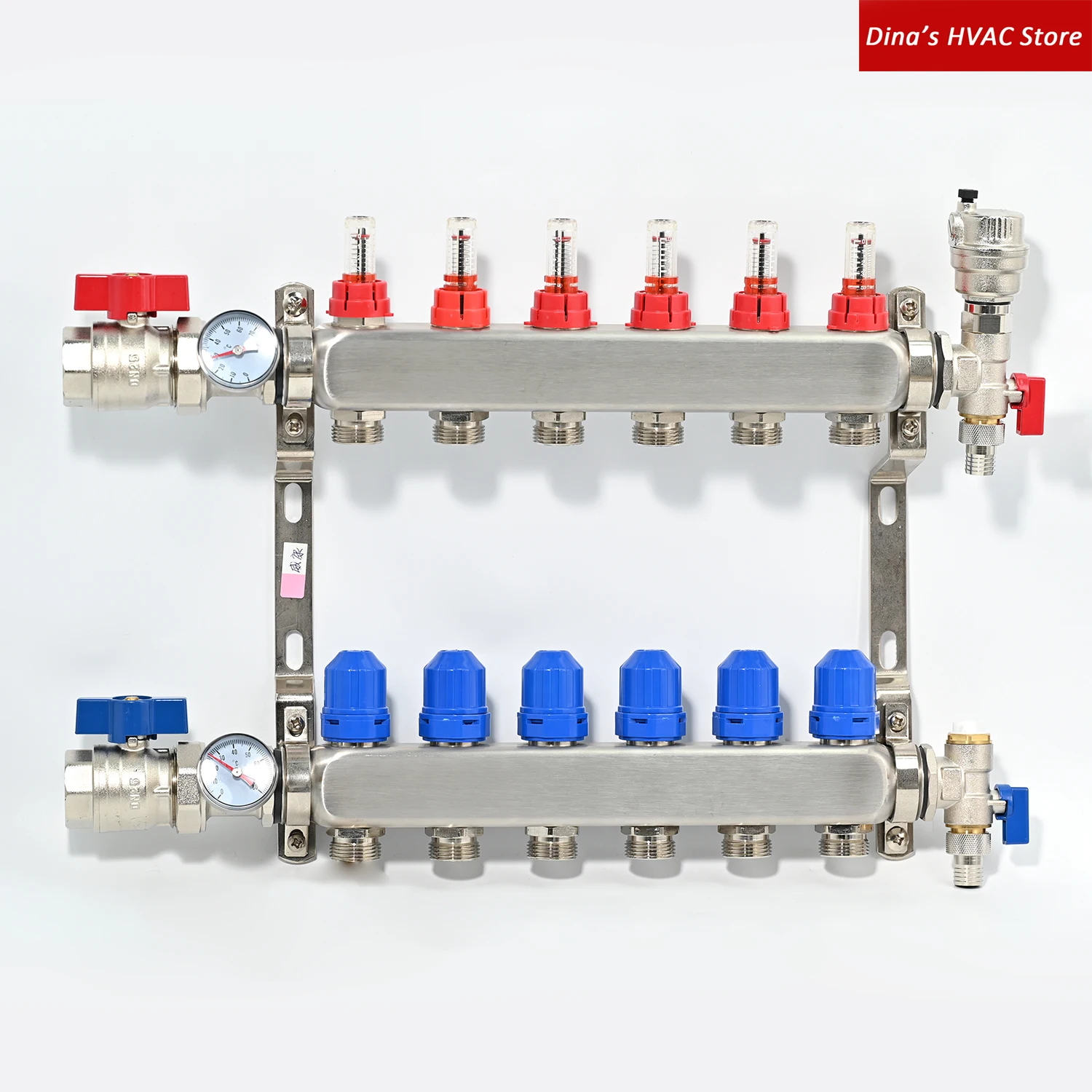

Upgrading your home’s heating system is more than just a maintenance task—it’s an investment in comfort, efficiency, and long-term savings. Among the most impactful upgrades today, popular floor heat manifold systems stand out as a reliable and modern solution for radiant floor heating. These manifolds serve as the central control hub, distributing hot water evenly across underfloor pipes to deliver consistent warmth throughout your living space. Whether you're building a new home or retrofitting an existing one, understanding how to select, install, and maintain the right manifold can transform your heating experience. This guide explores the essentials of choosing a high-performance floor heat manifold, highlighting why it remains one of the most trusted choices in smart home heating today.
What Is a Floor Heat Manifold and Why It Matters
A floor heat manifold is essentially a central distribution unit that connects multiple underfloor piping loops, regulating water flow and temperature to each zone. Unlike traditional forced-air systems, radiant floor heating using a manifold ensures gentle, uniform warmth that enhances comfort while reducing energy waste. These systems operate at lower temperatures—typically between 35°C and 55°C—making them safe, efficient, and compatible with sustainable heat sources like heat pumps. The manifold integrates valves, sensors, and sometimes smart controls, allowing precise management of heat output per room. This zoning capability means you can keep different areas at ideal temperatures based on usage, saving energy and money.
Note: A well-designed manifold improves system longevity by preventing pressure imbalances and thermal stress on pipes.
| Feature | Importance | Benefit |
|---|---|---|
| Zoning Control | High | Customizable comfort per room |
| Low-Temperature Operation | Medium | Energy savings and reduced wear |
| Material Durability | Critical | Longer lifespan and resistance to corrosion |
| Smart Integration | Growing | Remote monitoring and automated scheduling |
| Compatibility | Essential | Works with heat pumps, solar thermal, and conventional boilers |
| Zoning Control | High | Customizable comfort per room |
| Low-Temperature Operation | Medium | Energy savings and reduced wear |
| Material Durability | Critical | Longer lifespan and resistance to corrosion |
| Smart Integration | Growing | Remote monitoring and automated scheduling |
| Compatibility | Essential | Works with heat pumps, solar thermal, and conventional boilers |
Note: Choosing a manifold compatible with renewable heat sources future-proofs your investment and supports eco-friendly living.
Selecting the right floor heat manifold begins with evaluating your home’s layout and heating needs. Key factors include the total floor area, insulation quality, and desired temperature range. A well-sized manifold ensures balanced flow, preventing hot or cold spots. Pairing it with proper insulation maximizes efficiency, allowing the system to maintain comfort with less energy. Additionally, consider whether you want manual or automated controls—smart manifolds offer remote adjustments via apps, enhancing convenience and responsiveness. Always verify compatibility with your heat source, whether it’s a boiler, heat pump, or solar array, to avoid costly mismatches.
Note: Professional installation guarantees optimal performance and prevents leaks or uneven heating patterns.
Note: Regular maintenance—such as flushing the system annually—extends the manifold’s lifespan and keeps flow rates stable.
The installation process typically involves laying insulated pipes beneath the floor surface, connecting them to the manifold through precision fittings, and integrating a circulator pump to maintain steady flow. Zones are defined by thermostatic valves linked to the manifold, enabling independent control. While DIY kits exist, complex layouts or multi-zone homes benefit from certified technicians who ensure compliance with local plumbing codes and safety standards. Proper sealing and insulation around pipe runs prevent heat loss and moisture buildup, protecting both the system and your home’s structure.
Note: Insulate all exposed pipes and use expansion joints to accommodate thermal movement and reduce stress on connections.
In residential settings, popular floor heat manifolds range from compact residential units to modular systems designed for larger commercial spaces. Brands like Hydron, NIBE, and Vaillant offer models tailored for underfloor heating, featuring integrated controls and durable materials such as cross-linked polyethylene (PEX). When comparing options, prioritize systems with clear labeling, easy-to-use interfaces, and strong warranties. Reading user reviews and consulting with heating specialists helps identify reliable products that match your budget and performance goals.
Note: Look for manifolds with built-in pressure relief and freeze protection for added safety in colder climates.
Ultimately, upgrading to a popular floor heat manifold transforms your home’s comfort and efficiency. By centralizing control, enabling zoned heating, and supporting sustainable energy use, these systems deliver consistent warmth while lowering utility costs. With careful planning, professional installation, and ongoing maintenance, your radiant floor heating will become a cornerstone of a smarter, cozier living environment.